
the return of the Nightingale
I’m here basking in the morning sun, which is strengthening every day at Taramona. The prevailing wind is crisp, so it’s still cold in the shade. The white doves around me are picking at any grain left from the horses’ last feed. They’re all out right now, dozing in the warm rays at the top of the hill. The garden is at its peak; the smell of lilacs and roses quite literally sweetens the air. Migrating birds sing in the distance, and swallows swoop down for their first drink of water of the day before getting on with building their nests in the archways outside our chapel. José María is quietly tending to the garden and stocking the log piles for our next guests.
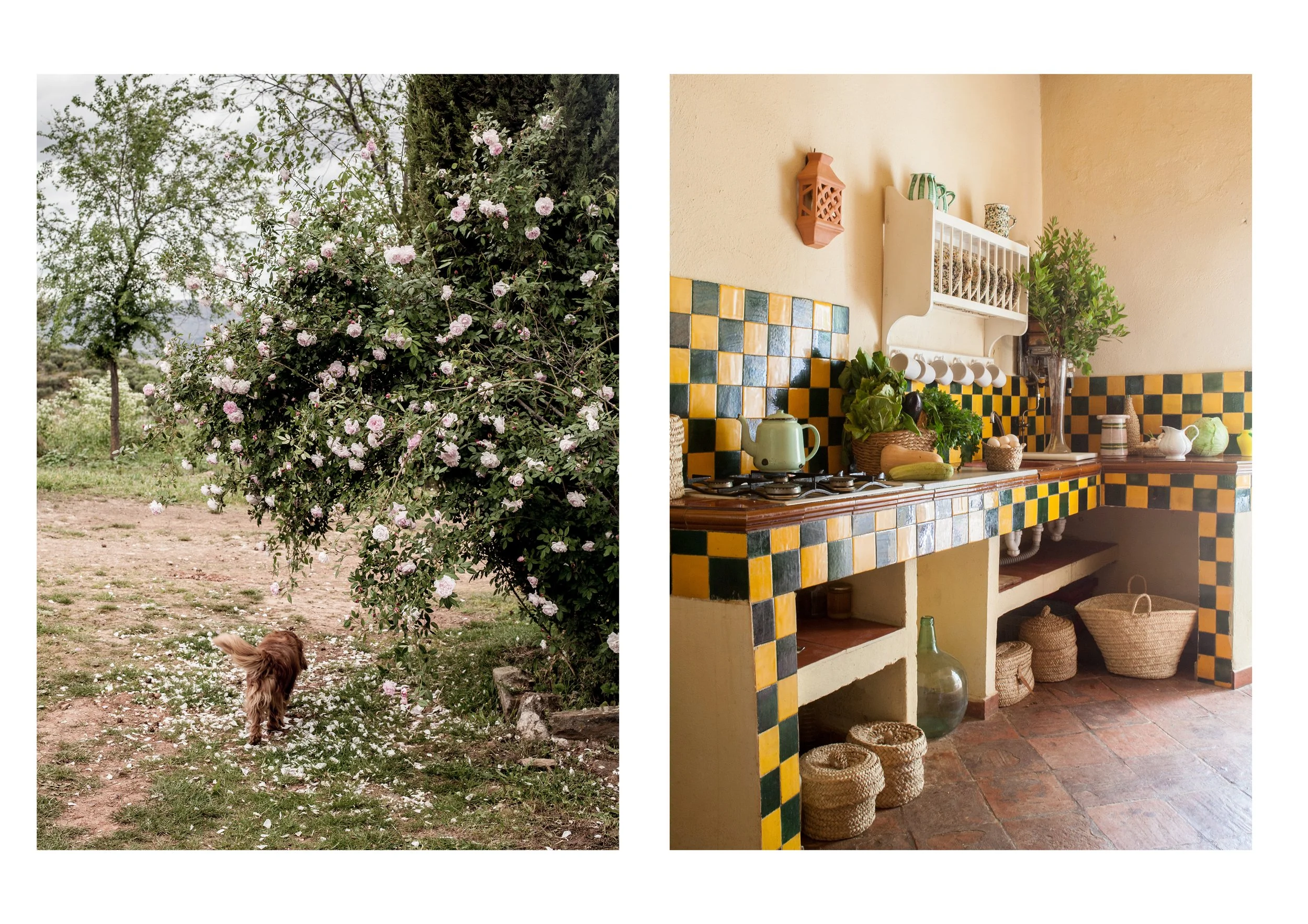
At every turn, I find myself at another overflowing, sumptuous pink rose bush, where I can’t resist burying my nose into its soft, unfolding petals to inhale all its beauty. The fires are still smoking from the night before, and our grooms are rhythmically getting on with their daily chores, greasing leather whilst sipping on Mate and coffee. I’m always jealous of anyone who gets to call Taramona their home. It seems silly, of course, because it’s ours—but right now, we reserve it as a place for you, our riding guests, and look forward dreamily to the day we make it truly our home. Our team, who often float from place to place or season to season, have luckily floated up here into this hidden abode where time stops, nature rules, and flamenco is still played through a cassette machine after dusk.
I suppose I should tell you a bit about what’s been going on around here. Although, just like the hills around us, our team has been in full hibernation since our last season ended. There has been enough rain to flood our crops—the horses found refuge under the big pine tree and planted their hooves firmly into the ground, with their rears facing directly into the wet wind to keep their chests and heads warm. It may seem harsh to have them out, but they’re much stronger for it and have lived like this forever. They move together like a flock of birds, taking turns shielding each other from the wind. They know exactly where it’s driest and warmest when it’s raining, where the first rays of sun appear, and where the last rays soften. They’re in tune and set a great example for the rest of us.
We left our beloved horses and farm in the hands of José María and Julito, who, if you haven’t met, are worth a visit just to share a contemplative cafe con leche with. Both single men (for different reasons), but very much in love with the countryside. They listen to a different type of news—one that tells you where the mushrooms have come out this year, how many foxes call at night, where the deer are jumping the fence, what day the nightingale returned from Africa, and of course, the weekly football match that plays through the dust-collecting radio. So we left them with a pile of wood to keep the fires going, both their rifles pointing in different directions, and flew back in time to Rajasthan, India.
George says, “When you’re in Rajasthan, Andalucía feels like Switzerland,” and I feel that more and more every time I go back. When you turn up at the butcher’s, they present you with the live goat and ask you to come back in the afternoon. In our wonderful rented home, the cleaners’ brooms sweep all day but rarely touch the floor. When you ask to do some laundry, a man turns up to take your clothes a twenty-minute drive away. They return a week later immaculately pressed, but smelling exactly the same as when you dropped them off. When they say, “Dinner in ten minutes, madam,” you say “one more drink” at least three times.
It has its quirks, of course—and yes, we really do see them as quirks—hysterical situations with grinning people pleased to meet us and take photos with our blonde, blue-eyed children. It makes for a marvellous adventure, and a lot of hard work too when Gigi and George begin to coordinate the rides. When we ask, “Please, tents up by 3, guests will arrive at 6,” they grin, nod, and say yes delightedly—but then return to the shade under the banyan tree to reflect.
Despite—or perhaps because of—this cultural difference, the rides were a mad, smile-inducing adventure, following George and our Indian coordinators through small villages and down buffalo-filled lanes to decadent, crumbling forts and true Rajasthani tented camps surrounded by enormous, ancient rocks that make a jaw-dropping home to the shy Indian leopard.
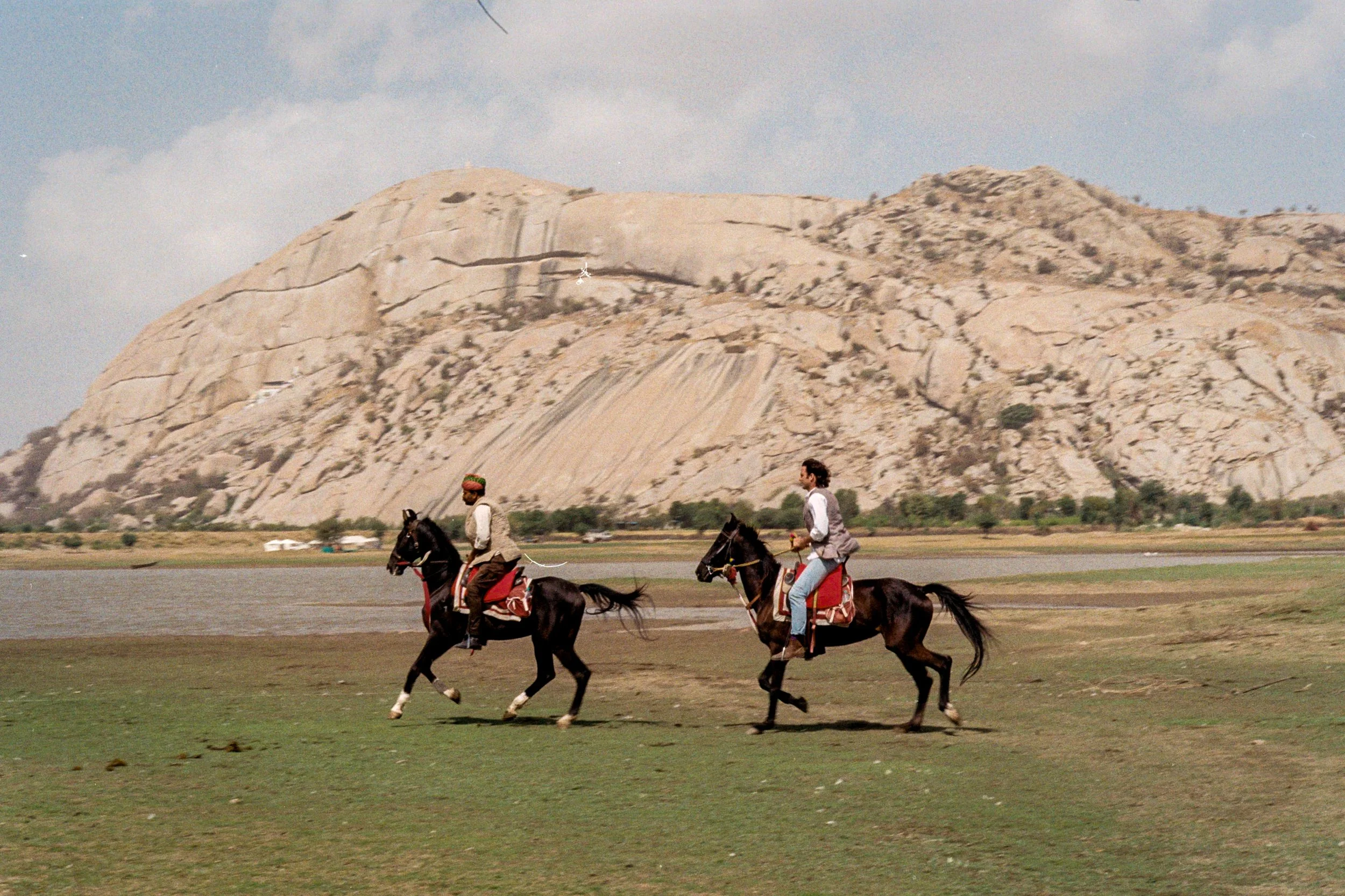
A lot of our inspiration for our rides at home comes from the decadence of Indian hospitality. Wherever you are, tea is served hot and sweet, cooked over a fire in front of you. Fire lanterns and candles are never scarce, and hot chapatis are presented to you with delicious daal in every mind-blowing location. And in the evening, musical performances—but not the kind where you feel bored and stuck in an awkward trap. The kind that makes you look into the musicians’ eyes, hypnotised by the sound of exotic instruments and the sight of shining turbans bobbing in the moonlight.
It’s all a colourful dream of joyful celebrations, musical theatre, and dazzling markets. A dream that came to an end a bit too quickly. Suddenly, two back-to-back seven-day rides were over, and the next task was to find our passports, which we had lost sight of as soon as we arrived. Alongside this came an almost anxious feeling about returning to the less forgiving world, but we promised ourselves to bring back Indian patience and gratitude to our lives in Spain.
On our return, we were nervous to hear how the farm had been. As they say, “no news is good news”—but it turns out the twelve piglets we left behind had been loose and lifting the crop since we left, and the whole field had become a frog-filled lake inhabited by a pair of storks building their nest on the steeple in town. So I now question whether no news really is good news. Still, it was a good moment to get things back on track and perform the yearly, somewhat sacrilegious Matanza, which must be done before the heat arrives. A three-day gathering spent slaughtering pigs and making chorizos, salchichón, and lomo, while freezing beautiful cuts of premium ibérico pork for extravagant Asado dinners this season. You invite all your friends to help and stuff yourself with ibérico pork until you can’t eat anymore.
It’s always a treat to learn the old-timers’ way of doing things—their chorizo recipes passed down through generations, and their stories of childhood in the Sierra, when the pig you slaughtered was the only meat you’d eat all year, and every part of it was savoured. Everyone gathers around the table, each with a specific job in one hand and a glass of local wine or Mosto in the other. One person cleans the sausage casings, another fills them, another ties the knot, another strings them up, another hangs them—and the conveyor belt goes on and on. It’s a long three days, but at the end of it, you’re left with a glorious north-facing room filled with your hard work hanging to cure.
Since our return, Julito and José María’s roles have slightly changed. Julito has become our resident nanny and is completely infatuated with our daughters, giving them all the attention in the world—which, of course, they’re delighted with. Like most Spaniards, he is enamoured by any child under the age of ten. However, he still carves out time each morning and evening to aim his slingshot at the birds nesting on the rooftops.
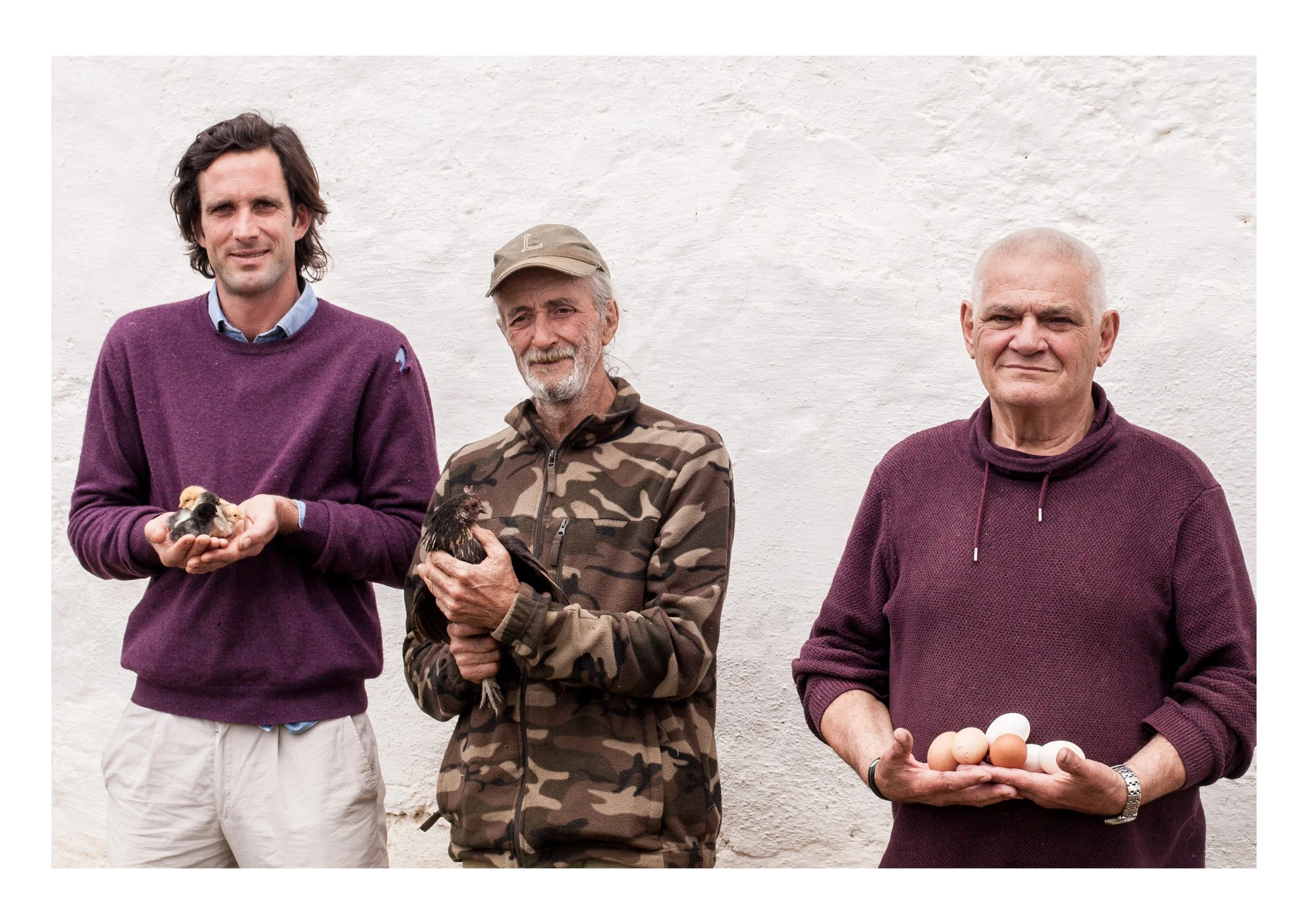
Gigi and José María are planting our spring vegetable garden, and in old J’s free time, he walks the hills picking wild asparagus for his midweek dinner, each time returning with a barrel-sized bunch of green, iron-rich fronds tied together with a piece of hay-bale twine. Revuelto de espárragos is the early spring’s staple dinner for every Cazallero: softly fried garlic and asparagus, then add rich, creamy eggs lightly scrambled at the end. A melt-in-the-mouth, foraged delicacy we all look forward to after the rains.
George and I have always been drawn to the beauty of locally hand made pieces — the patience, the skill and the traditions they carry. Over time, we’ve been lucky to work alongside artisans who share that same philosophy, creating pieces for our small shop. From jumpers knitted locally with wool from the Sierra, to knives shaped with shedded deer antlers, and personalised goat leather wine skins — each piece is rooted in tradition and care.
Most recently, our path led us to Valverde del Camino, a place long known as the heart of Spanish boot making, where craftsmanship is still passed down through generations. There, in a family workshop, we watched as premium leather was carefully cut and stitched, bringing to life the iconic Rociero boot. Together, we’ve reimagined an old design, refining it for riding today while honouring its original spirit. The result is something timeless yet comfortable, made to be worn, lived in, and loved over time. They’ve now found their place in our shop, and it means a great deal to share them with you.
In many cities in Spain, especially in Andalucía, Easter is one of the biggest celebrations of the year. In Seville, the city seems to surrender itself to the week: fragrant orange blossom hangs in the air, and time loosens its grip for something older and slower to take over. The Pasos arrive with a kind of hushed grandeur—great moving altars depicting scenes of Jesus’ journey to the cross, richly carved and heavy with gold leaf, velvet, and flowers. Upon them stand sacred figures—Christ in moments of suffering, the Virgin crowned in sorrow—lit by hundreds of candles and admired by thousands. Beneath them, hidden entirely from view, dozens of costaleros carry the weight together—forty or fifty men bound in silence, turning burden into penitence. Everything creaks, flickers, and breathes; nothing feels rushed, nothing feels modern. Religious or not, it is a tradition that must be seen.
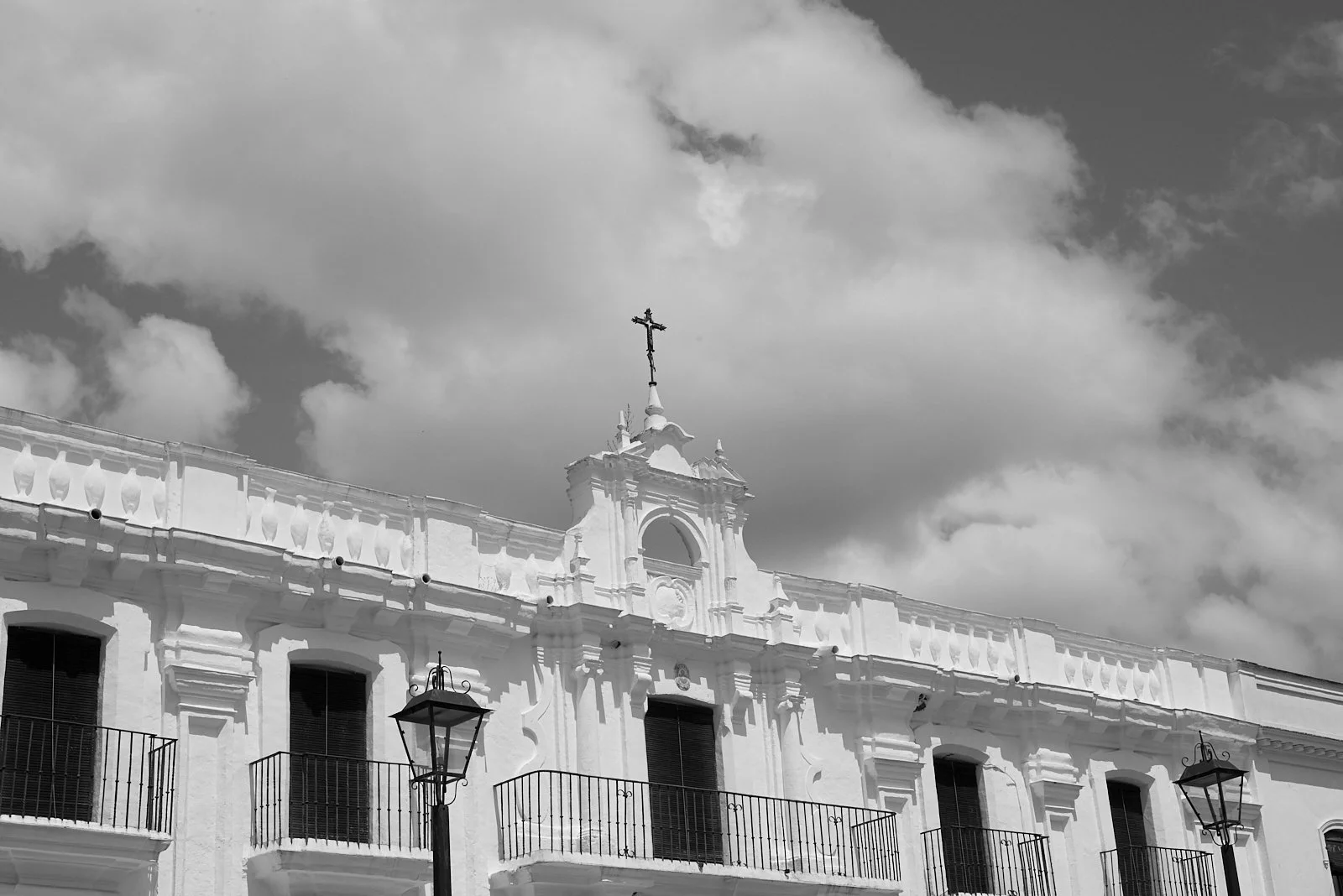
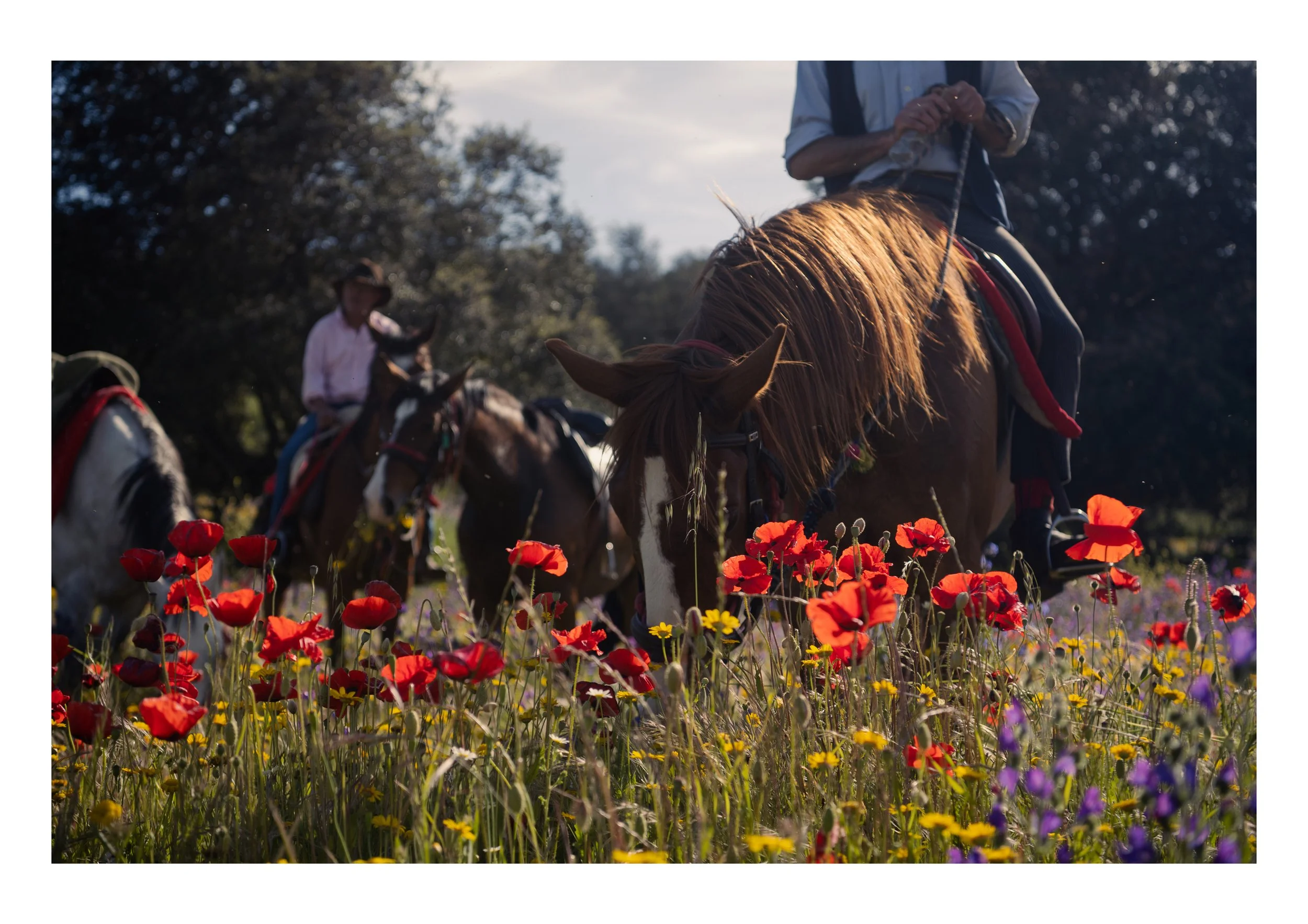
So, as the whole of Spain closes down for its week of religious festivities, we continue with our season of rides, hearing bands in the distance as we ride passed town. As I mentioned, spring is maddeningly quickly, and we are making the most of every flowering poppy. Guests at this time of year swim in the Alberca and enjoy sundowners in their dressing gowns overlooking the view.
Taramona is filled with the cry of the dancing peacock, and the hens slowly but surely disappear into hidden, tranquil spots under the brambles—no doubt to reappear soon with gorgeous chicks. As we enjoy spring, we hope you enjoy yours too, and wish you a very Happy Easter.
From Héloïse, Gigi and George
Saddles with George available in Autumn.
10th-13 September
1st - 4th October
22nd - 25th October
Taramona will be available to rent for the months of July and August. More information on our website.
Add yourself to the waiting list to buy a pair of our boots.